Monday, February 28, 2022

Pressure, Pressure and More Pressure

“Some people thrive under pressure, but pressure can also ruin your performance, it can push you down angles which you don't want to go.”

-Henry Cavill


Psychology and how the mind works has always fascinated me. When you learn how your own mind works it can enable you to function at a higher level. Additionally, when you learn how other people’s minds work, it can help with your relationship with them. This is because you know both what to expect from them and how to best communicate with them.

Psychology plays a critical role in aviation. Pilots need to learn how they behave in certain situations. First officers need to know how, and when they should raise objections to the captain. Biases during flight (e.g. expectation bias, confirmation bias), as well as human factors (task saturation, tunnel vision) can lead to catastrophic results.  

There is something else that can cause pilots to make poor judgements, and that is pressure. 

Pressure can come in one of three forms:

  1. Direct pressure

  2. Indirect pressure/historical

  3. Self-imposed pressure.

Direct pressure is when hierarchy demands that the pilot must do something. E.g. land the plane on time and at the intended airport. This can result in the pilot performing unsafe procedures, for example flying too fast or landing in unsafe weather conditions, in order to meet the demanded goal.

Indirect pressure/historical is where nothing is being told to the pilot at this moment, however, he is aware that his colleague was fired when the colleague chose to land at an alternate airport due to an unsafe weather condition at the intended airport.

Self-imposed pressure is when nothing is being told/demanded of the pilot at all. Nevertheless, the pilot feels an obligation towards the company and his passengers to the point that the pilot doesn’t recognize any other options other than landing at the intended airport at the scheduled time.

People will recognize the direct pressure while it is happening, but the latter two pressures they’re often blinded to while it is happening.

Why am I speaking about pilots? Because you can change pilots to children and it is the same story.

Children feel these same 3 different types of pressures from their parents. But most of the time, the parents are oblivious to the fact that they’re pressuring their child via indirect pressure/historical pressure. Parents also don’t try to alleviate the self-induced pressure that the child has placed upon themselves towards the goal of gaining the acceptance and recognition of the parent.

Children are sponges, they hear what you say. 

They remember how you’ve previously reacted to different events, regardless of whether it involved them or not.

These all play a huge role in the indirect and historical pressures that we place upon our children.

In the coming articles, I hope to delve further into this idea. How it relates to specific situations, including children reporting sexual abuse, and how we can better recognize it and prevent it from happening in the future.


Yisroel Picker is a Social Worker who lives in Jerusalem. He has a private practice which specializes in working with people of all ages helping them understand their own thought processes, enabling them to improve their level of functioning, awareness, social skills and more.


To speak with Yisroel about presenting at a child safety event or to discuss a personal case, email him at yisroel@ympicker.com


Follow Yisroel on LinkedIn Here

Follow Yisroel on Facebook Here


Friday, January 7, 2022

Reviewing the Lessons

 “We should be careful to get out of an experience only the wisdom that is in it and stop there lest we be like the cat that sits down on a hot stove lid. She will never sit down on a hot stove lid again and that is well but also she will never sit down on a cold one anymore.”

― Mark Twain


Years ago I was watching a show detailing how an 11 year old son saved his mother’s life. He was in the front seat of the car, and his mother was driving. Mom, who was diabetic, didn’t monitor her blood sugar levels before driving. While on the highway, mom, who also wasn’t wearing a seatbelt, passed out. The son unbuckled himself, pulled the car over onto the shoulder, got the car to stop and put it into park. He then was able to get help for his mother. 

As mother and son were recapping the event, mom said “People should learn from my situation that they should always wear their seatbelt. I was lucky, you may not be.”


This angered me. Granted, one must wear a seatbelt, but by focusing on the wrong lesson, one misses the actual lesson. 


The lesson here was that diabetics need to be monitoring their situation.

The lesson here is that not monitoring the situation can cause harm not only to oneself, but to one’s family and others as well.

She was in danger.

Those in the car with her were in danger.

Those on the highway with her were in danger.


By focusing on a secondary problem, the seatbelts, she is indicating that the need for monitoring is a non-issue.


I bring this up because many are discussing the lessons that one should learn from this entire Chaim Walder saga.


Some of their lessons are secondary in nature. Meaning that by focusing on them one is missing the main point.


Some of these lessons are worse than that. They’re ideas and rules that are being misapplied. Running the risk that future victims will misapply these “lessons” when computing their own situation.


I’d like to focus on a few of these lessons in greater depth, and why they don’t belong within the Chaim Walder discussion.

*Please note, the omission of a lesson from this list does not mean that I endorse it as a lesson that one should learn from the case. *


Lashon Hara/Public Shaming: Lashon Hara is a serious offense. It is something that people of all backgrounds and all ages need to improve. But to discuss Lashon Hara in the context of this case is implicitly telling victims of abuse (and people who are aware of ongoing abuse) that they cannot speak up due to Lashon Hara. Therefore, the Walder case should NOT become a catalyst to improve our Lashon Hara. Feel free to do it on your own, but do not teach that one should do so because of the Walder case.


Suicide Contagion: This is a fancy way of saying that suicide is contageous, which it is. But to turn this into a discussion about suicide contagion is saying that Shifra Yocheved Horovitz, may her memory be blessed, ended her life for that reason. She ended her life because we failed her as a society, because the pain was too much for her. Not because Walder’s, or anyone else’s suicide encouraged her to do the same.


Therapists must be licensed: Absolutely true. You shouldn’t go on a bus if the driver isn’t licensed. You shouldn’t board a plane if the plane hasn’t passed inspection. Likewise you shouldn’t be seen by a therapist, or any other medical professional who isn’t licensed. Sadly, licensed professionals also abuse. By pointing the finger at the notion that Walder was unlicensed, is implicitly telling people that nothing bad can happen if they’re working with someone who is licensed, which is a falsehood. The abuse didn’t happen because they went to an unlicensed therapist. It happened because the person who they were receiving therapy from was a sexual predator. 


Yichud (segregating alone with a member of the opposite gender): Yichud is a gezeira, a Rabbinic rule, which was put into place saying that if two people of opposite genders are alone, their thoughts and urges might become too much to control. Therefore, one should not be alone with a member of the opposite gender.

I’m not going to debate Yichud. 

Yichud is extremely important.


But Yichud plays no role here. We aren’t discussing a situation where “urges took hold”. This is a case of a serial predator who was found to have 22 credible independent complaints against him. There is also the tape of him grooming his victim even after the abuse (“If you tell people, I’ll kill myself”). 

Yichud was put in place to stop natural urges, this case went well beyond that. 

This was grooming. 

This was manipulation. 

This was control. 

This was power.

Yichud is extremely important, but it wasn’t the reason why this serial abuser acted the way that he did.


Additionally, abuse is also done within the same gender, and that is not protected in any way by yichud.


CCTV/Video Cameras: Some people have told me that the lesson here is the need for there to be video cameras. This is an outright fallacy. Video cameras are a deterrent, they do not prevent. A sexual predator who has groomed their victim into silence, isn’t worried about video cameras. Also, who is looking at the cameras? Who has access to the videos? How long are they kept for? There are a plethora of cases where the video got “lost or erased”, due to length of time, incompetence or malice. 


The evils of social media/smartphones: This makes as much sense as using the Walder story as proof that one should wash their hands with soap and water after using the toilet. There is zero connection. 


Tznius: The go to issue when any calamity befalls Am Yisroel. A serial abuser doesn’t abuse people because their victim has a lack of tznius. One should never EVER use a case of abuse, neither this specific case or any other case, to highlight the need for tznius. That’s classic blaming the victim. 


There are many people who are victims of abuse who have never disclosed their abuse. Merely making a connection (of any type) between tznius and abuse is both blaming and guilting them for the unjust tragedy that they’ve suffered.


The Lessons that Accurately Connect with the Story:

  1. Believe Victims

  2. Stop placing the wellbeing and the livelihood of the abuser before victims

  3. Stop protecting the abuser because of “all the good they’re doing” and “they have a family and the family members have done nothing wrong”

  4. Speaking about abuse isn’t lashon hara

  5. Attempting to stop abuse isn’t publicly shaming

  6. Learn that the rate of false reporting of abuse is extremely low (and most of those happen in divorce/custody cases) - Link

  7. Just because someone gives off an impression of being upstanding and holy, doesn’t mean that they are

  8. Boundaries are for everyone. Be wary when someone says “It’s ok, I’m a…”


“Those who do not learn history are doomed to repeat it.”

May we successfully learn from this fiasco, ensuring that it shall never repeat itself.


Yisroel Picker is a Social Worker who lives in Jerusalem. He has a private practice which specializes in working with people of all ages helping them understand their own thought processes, enabling them to improve their level of functioning, awareness, social skills and more.


To speak with Yisroel about presenting at a child safety event or to discuss a personal case, email him at yisroel@ympicker.com


Follow Yisroel on LinkedIn Here

Follow Yisroel on Facebook Here



Thursday, January 6, 2022

Keep Smiling

 “A fake smile may fool the crowd but it never eases the pain.” 

– Kelly Brook


“Turn that frown upside down!”

“It takes 72 muscles to frown and only 14 to smile.”

“You’d look prettier if you smiled.”

“Smile!, it won’t kill you”


These phrases, and their variations, are often said by parents, and other adults of hierarchy, to children.


Communication can be done via many different methods. One way is through facial expressions. 


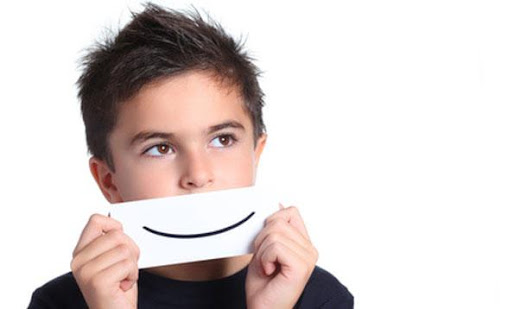
When an adult tells someone that they better stop looking sad and start looking happy, the adult is telling them that they need to stop communicating their feelings of sadness.


There are two things we can do when there is a problem, one can try to fix it, or one can pretend that it doesn’t exist. 


Telling someone that they need to smile is a shorthand way of telling them that their feelings are making you uncomfortable, and you would like them to stop communicating their feelings to you.


A true friend, a real caring person would try to figure out why the person in question isn’t smiling, not request that the problem be concealed.


People of all ages have feelings and concerns. Often, they just need someone to speak with, someone who can just listen and “hear them out”. By squashing the means of communication, you’ve deprived them of that so desperately required by them. Worse yet, you’ve also insisted that they broadcast to the world that all is ok with them (since they’re now faking a smile).


Forcing a smile isn’t the only way that people who need to express themselves get shot down. 

Sometimes they get shot down because they’re:

being accused of negativity, 

bringing up the past (what’s the point, move on) or 

speaking “ill of the dead”. 

However colorfully it gets phrased, it boils down to the same thing, figuratively duct taping the mouth because the listener is bothered by the topic that is about to be discussed.


The role of a friend is to be there for their buddy.

The job of a parent is to listen to their child.


What children hear from their friends and from the news naturally will make them curious. 

It will often confuse them.

They will likely have questions. 

Sometimes they will actually ask a question in question format. On other occasions, they will make a statement in the hope that it will elicit a response and become the start of a dialogue.

However they approach the situation, the issue is clear. They’re reaching out asking for you to communicate with them about what it is that is bothering them.


And that presents you with two options, discuss or don’t discuss. 


If what they’re telling you is making you uncomfortable, try to find them someone helpful whom they can speak with. Acknowledge their concern, and express that while you aren’t capable of having this conversation, you’ll connect them with someone who can and will.


That’s the correct course when you cannot fill the required role.


But by telling them to be quiet, and worse, by telling them that they have no right to speak (be it due to negativity, being “in the past” or speaking “ill of the dead”) you’ve done a double crime. Not only have you told them that you’re incapable of being a listener for them, but you’ve taken away their permission to even speak to anyone about this topic that is of concern to them.


Recently I was listening to eulogies of someone who died way too young, and a speaker said something that burned me inside: “We tell people that smiling never killed anyone, but his smile killed him”, meaning that he pretended that all was ok when it obviously wasn’t.


Things are not ok. Many are shaken and confused by what is going on. 


It is one thing if the person isn’t communicating that there is a problem, but to convince those struggling that they aren’t? That they can’t be? That they aren’t allowed to?


Words cannot properly convey how wrong that is.


Yisroel Picker is a Social Worker who lives in Jerusalem. He has a private practice which specializes in working with people of all ages helping them understand their own thought processes, enabling them to improve their level of functioning, awareness, social skills and more.


To speak with Yisroel about presenting at a child safety event or to discuss a personal case, email him at yisroel@ympicker.com


Follow Yisroel on LinkedIn Here

Follow Yisroel on Facebook Here

Wednesday, January 5, 2022

Missing the Mark: Who Gets the Blame?

 “People may not realize the damage that they are doing by placing the blame on the victim, but that doesn't lessen the damage that they cause by doing it.”

― Darlene Ouimet 


The defendant was standing in front of the judge.


He was arrested for stealing a brand new luxury car.


He was facing a minimum of a dozen years behind bars.


As he was standing in front of the judge (he waived his right to a jury trial), about to make his final plea for leniency, he said the following words:


“Your honor, in all fairness, he did leave the car unlocked”.


The judge turns to the defendant and says “You’re right, it is the fault of the car owner. It was, afterall an unlocked car and it is the newest BMW. The car owner should have known better”. 


The judge gives the defendant a nominal fine and insists to the gallery that the defendant has learned his lesson.


What type of reaction does the above story cause you to have?

Understanding? Rage? Sympathy? Anger?


The story about the judge and the auto theft is fiction. 

However, if you replace “judge” with “our community” and “auto theft” with “sexual abuse” the story is accurate.


The problem was how she dressed.

The problem is yichud

The problem is the lack of cameras

The problem is intergender therapy/doctor visits

The problem is tznius

The problem is that the victim is just seeking attention

The problem is the internet/iphones

The problem is …


Lack of protection is NEVER a cause.

They are two separate and independent items.


Obviously one should be wearing a seatbelt in a car, but the lack of wearing a seatbelt does not absolve the drunk driver who causes the crash.


Likewise one should be careful with the laws of yichud, but the mere fact that two people ended up alone in the same location does NOT mean that one party gave permission to the other to abuse them.


Yichud is a “fence”, a protective measure implemented to prevent a transgression. Just like locking your car doors.


In both cases, the lack of a protective measure doesn’t permit the transgression.


The problem is the abuser, only the abuser and nothing but the abuser. 


Yisroel Picker is a Social Worker who lives in Jerusalem. He has a private practice which specializes in working with people of all ages helping them understand their own thought processes, enabling them to improve their level of functioning, awareness, social skills and more.


To speak with Yisroel about presenting at a child safety event or to discuss a personal case, email him at yisroel@ympicker.com


Follow Yisroel on LinkedIn Here

Follow Yisroel on Facebook Here


Thursday, December 30, 2021

Trigger Happy

 "There are wounds that never show on the body that are deeper and more hurtful than anything that bleeds."

— Laurell K. Hamilton


Clint Malarchuk was a hockey goalie who played in the NHL. 


He played with 3 different teams over the course of his 10 year career.


He won 141 games over those ten years.


But he will forever be remembered for a single incident that happened during a game on March 22, 1989 in Buffalo, when an opponent’s skate inadvertently severed Malarchuk’s artery in his neck and partially cut his jugular vein.


He lost a third of the blood in his body that night. It took over 300 stitches to close the wound. (The video is available on YouTube, due to its graphic nature, I will not link to it)


Miraculously he survived. 


But the horrors of that event were only just beginning. 


Eventually things got under control. He was seeing a mental health professional. He was on the right medications.


Then the Richard Zednick injury happened.


Zednick, also an NHL player, was cut in the throat by his teammate’s skate during a game. (Video is also available on YouTube, due to its graphic nature, I will not link to it)


Malarchuk didn’t witness the event, nor did he watch a replay of it later, but he heard about it, and he was asked to discuss it.


All seemed well, he discussed the situation with clarity and insight that only he could provide.


Except all wasn’t ok. 


Despite neither being there nor ever seeing a replay of the Zednick injury, the mere learning of it triggered Malarchuk’s PTSD (Post Traumatic Stress Disorder).


Suddenly he couldn’t sleep. He kept on revisiting his own horrific injury.


It all became too much for him.


Eight months after the Zednick injury, and nearly 19 years after his own injury, Clint Malarchuk shot himself in the head with a gun.


For the second time in his life, he survived a near-death experience.


The reason I mention the story of Clint Malarchuk is to illustrate how triggers work. 


Triggers don’t need to be direct. 


The trigger might simply be hearing people discuss something.


What do I mean?


How do you speak when someone famous and renowned gets accused?


Do you say that the person is so famous that there is no way they could have done it?


Will you say that without witnesses, a victim cannot be believed?


Do you find some blemish in the victim’s character to diminish their credibility?


Will you say that it is the victim’s word versus the abuser’s word, and that isn’t enough?


Do you play the “lashon hara” card and silence the one who is mentioning the accusations?


Do you insist that the abuser’s “parnassa’ (livelihood) is going to suffer, and that sharing news of the allegations will harm the accused irrevocably? 


Do you play the “he has a family” card? Insisting that spreading such news harms the wife and children of the accused.


According to statistics, 1 out of every 3 girls, and 1 out of every 5 boys are sexually abused before they reach 18.


So it is quite likely that someone will overhear your comment, and be reminded about their own victimization.


And they’ll be reminded what they were told:

That they were making it up

That they can’t be believed

That the abuser has a family

That there is no way a man of the stature of the abuser could do such a thing

That they were saying lashon hara.

That without witnesses, they, the victim was powerless.


Based upon the aforementioned statistics, there are probably many people in your life (unbeknownst to many of their colleagues) who are survivors of sexual abuse.


By discussing these accusations and siding with the accused, it is quite possible that you’re triggering them.


PTSD and triggers are real.


They can happen even many years later, as the Clint Malarchuk story shows us.


By silencing victims, however one might be doing so, you’re basically playing a game of Russian Roulette, pointing a gun of PTSD at each and every person who is hearing your words.


Yisroel Picker is a Social Worker who lives in Jerusalem. He has a private practice which specializes in working with people of all ages helping them understand their own thought processes, enabling them to improve their level of functioning, awareness, social skills and more.


To speak with Yisroel about presenting at a child safety event or to discuss a personal case, email him at yisroel@ympicker.com


Follow Yisroel on LinkedIn Here

Follow Yisroel on Facebook Here



Monday, December 27, 2021

"You Did it by Yourself!"

 “Ask for help. Not because you are weak. But because you want to remain strong.”

-Les Brown


Based upon the actual definition of the word, “brainwashing” isn’t the correct word to use. But I will use it because I believe it best gets the message across. It is better to be understood accurately than to be misunderstood while technically correct.


The way we raise and educate our children is brainwashing. We take brains that are empty of information and we (try to) fill them with valuable lessons and morals. 


A child will take these lessons and use them during the course of their lifetime.


One lesson that we all bestow upon our children, is the lesson that was taught to us from when we were young, that the ideal is to be able to do something by ourselves.


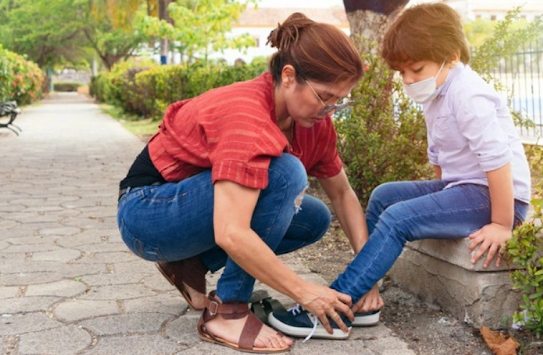
Kids are rewarded when they can get dressed by themselves, tie their shoes on their own, and cross the street without assistance.


As they grow older, the goals become greater, but the message is still there, the ideal is to be able to do it by yourself.


Unfortunately, this message can be taken the wrong way.


By focusing on how great it is to do things by oneself, some children perceive it as a weakness if they are unable to, and therefore require assistance from others.


These same children turn into teenagers, and these teenagers turn into adults, all with the same belief:


“I am weak and I am a failure if I need help from others.”


If we want to end the stigma about mental health issues, if we want people to be comfortable seeking help, we need to start from the beginning.


Yes, we need to celebrate solo accomplishments. They are signs of growth and they’re worthy of being honored. 


But if we get carried away celebrating the solo, we risk brainwashing our children that they’re flawed if they need assistance. 


Life is about balancing many different things. These two opposite, yet equally important messages must be balanced. 


  1. Doing something myself is a sign of growth 

  2. Seeking and/or receiving assistance is not only ok, but it can also be a sign of growth


As it says in Koheles (Ecclesiastes), “There is a time and place for everything under the sun.” 


There is a time to do things alone and there is a time when one will need assistance of some type.


One is not greater than the other, it is all about knowing which applies when.


Yisroel Picker is a Social Worker who lives in Jerusalem. He has a private practice which specializes in working with people of all ages helping them understand their own thought processes, enabling them to improve their level of functioning, awareness, social skills and more.


To speak with Yisroel about presenting at a child safety event or to discuss a personal case, email him at yisroel@ympicker.com


Follow Yisroel on LinkedIn Here

Follow Yisroel on Facebook Here